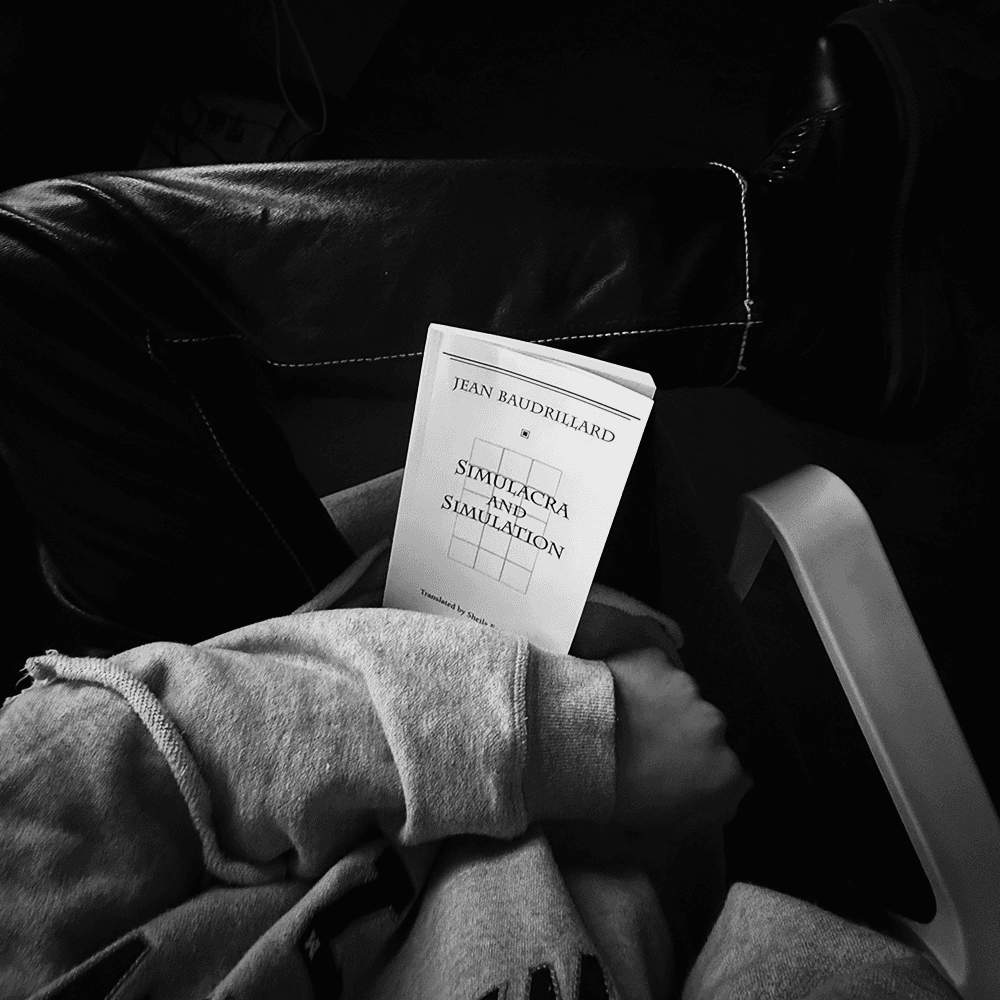
the modern journalist
the modern journalist
The American public was first alienated from the media because they no longer saw themselves in it.
The job of the journalist is to paint a portrait of reality that aligns with the public's phenomenological experience. This does not always align with objective reality, however, and the distance that can emerge between the two produces some of the most revelatory journalism. But you are, always, primarily beholden to the public.
I wouldn't say it's necessarily analogous to holding a mirror to reality. The process of reflection lacks the intentionality that journalism requires from human beings. Painting involves decision-making about what you include in your portrait, what brush you use, etc.
Whether you're writing opinion or breaking news, the portrait you paint should reflect some part of reality as it is. Not as you want it to be. The public is smarter than we often give them credit for. They know when they are being lied to and when they are receiving a reconstructed version of reality.
The portrait you want to paint might focus on one aspect of public life more than another. You might invoke the same kinds of analyses consistently if you write opinions. But importantly, no two painters can recreate the same portrait.
When readers open your pages, it is an experience analogous to visiting a museum. If you dislike the artwork, you're not very likely to stay long. If you like a few pieces, you might linger a bit longer. If you love what you see, you can spend all day there.
The new media companies of the present year have succeeded precisely because they have been able to successfully capture the phenomenological experience of the public. It is true that the public is often wrong about causality. Misinformation is pervasive and has gotten worse in the age of LLMs and social media.
That's why being grounded in objective truth is important. If you are going to tell them reality is not how they experience it, you need to be right about such an assertion.
But they are also often right. They may not understand the causes, but they understand the material reality they inhabit. Lived experience, if you will.
So, then, the job's role has gotten slightly narrower? If visiting an online magazine is analogous to visiting a museum, you need to convince people to get through the door. This is the delicate balancing act of journalism. You must not affirm false causality, but you must still get readers. How that happens is what separates the publications that succeed from the ones that don't.
The challenge that the modern journalist faces then lies in the project of constructing a shared epistemic foundation. This process is inherently dialogical, with the foundation reflecting the synthesis of the public's and the journalist's imaginations.
The American public was first alienated from the media because they no longer saw themselves in it.
The job of the journalist is to paint a portrait of reality that aligns with the public's phenomenological experience. This does not always align with objective reality, however, and the distance that can emerge between the two produces some of the most revelatory journalism. But you are, always, primarily beholden to the public.
I wouldn't say it's necessarily analogous to holding a mirror to reality. The process of reflection lacks the intentionality that journalism requires from human beings. Painting involves decision-making about what you include in your portrait, what brush you use, etc.
Whether you're writing opinion or breaking news, the portrait you paint should reflect some part of reality as it is. Not as you want it to be. The public is smarter than we often give them credit for. They know when they are being lied to and when they are receiving a reconstructed version of reality.
The portrait you want to paint might focus on one aspect of public life more than another. You might invoke the same kinds of analyses consistently if you write opinions. But importantly, no two painters can recreate the same portrait.
When readers open your pages, it is an experience analogous to visiting a museum. If you dislike the artwork, you're not very likely to stay long. If you like a few pieces, you might linger a bit longer. If you love what you see, you can spend all day there.
The new media companies of the present year have succeeded precisely because they have been able to successfully capture the phenomenological experience of the public. It is true that the public is often wrong about causality. Misinformation is pervasive and has gotten worse in the age of LLMs and social media.
That's why being grounded in objective truth is important. If you are going to tell them reality is not how they experience it, you need to be right about such an assertion.
But they are also often right. They may not understand the causes, but they understand the material reality they inhabit. Lived experience, if you will.
So, then, the job's role has gotten slightly narrower? If visiting an online magazine is analogous to visiting a museum, you need to convince people to get through the door. This is the delicate balancing act of journalism. You must not affirm false causality, but you must still get readers. How that happens is what separates the publications that succeed from the ones that don't.
The challenge that the modern journalist faces then lies in the project of constructing a shared epistemic foundation. This process is inherently dialogical, with the foundation reflecting the synthesis of the public's and the journalist's imaginations.
The American public was first alienated from the media because they no longer saw themselves in it.
The job of the journalist is to paint a portrait of reality that aligns with the public's phenomenological experience. This does not always align with objective reality, however, and the distance that can emerge between the two produces some of the most revelatory journalism. But you are, always, primarily beholden to the public.
I wouldn't say it's necessarily analogous to holding a mirror to reality. The process of reflection lacks the intentionality that journalism requires from human beings. Painting involves decision-making about what you include in your portrait, what brush you use, etc.
Whether you're writing opinion or breaking news, the portrait you paint should reflect some part of reality as it is. Not as you want it to be. The public is smarter than we often give them credit for. They know when they are being lied to and when they are receiving a reconstructed version of reality.
The portrait you want to paint might focus on one aspect of public life more than another. You might invoke the same kinds of analyses consistently if you write opinions. But importantly, no two painters can recreate the same portrait.
When readers open your pages, it is an experience analogous to visiting a museum. If you dislike the artwork, you're not very likely to stay long. If you like a few pieces, you might linger a bit longer. If you love what you see, you can spend all day there.
The new media companies of the present year have succeeded precisely because they have been able to successfully capture the phenomenological experience of the public. It is true that the public is often wrong about causality. Misinformation is pervasive and has gotten worse in the age of LLMs and social media.
That's why being grounded in objective truth is important. If you are going to tell them reality is not how they experience it, you need to be right about such an assertion.
But they are also often right. They may not understand the causes, but they understand the material reality they inhabit. Lived experience, if you will.
So, then, the job's role has gotten slightly narrower? If visiting an online magazine is analogous to visiting a museum, you need to convince people to get through the door. This is the delicate balancing act of journalism. You must not affirm false causality, but you must still get readers. How that happens is what separates the publications that succeed from the ones that don't.
The challenge that the modern journalist faces then lies in the project of constructing a shared epistemic foundation. This process is inherently dialogical, with the foundation reflecting the synthesis of the public's and the journalist's imaginations.
san antonio, tx
28 oct. 2025
زمان باید بگذرد