remorse
I’ve been thinking a lot recently about apologies and remorse. What their “primary function” actually is. Rather than articulating what I think it is, I think it may be easier to list what it isn’t.
The most meaningful apologies are often the hardest, which is why we avoid them. It’s far easier to posture as though the thing you’re apologising for never happened. And when we do apologise, we often misunderstand the premise. Good apologies don’t demand reconciliation.
They demand that the party apologising feels genuine remorse about the way they’ve treated or acted towards someone. From this tension emerges confrontation: great apologies involve a mix of genuine remorse without the expectation of reconciliation and, crucially, self-forgiveness.
Good apologies are hard to negotiate precisely because they involve some amount of meaningful self-awareness to know that you should apologise without placing the burden of your own expectations on the party receiving it. Individuals should be willing to offer forgiveness, but forgiveness does not necessarily precede reconciliation. The apology does not necessarily precede the “happy ending.”
Growth emerges in the distance between apology and forgiveness. You are at your most vulnerable in the moments after you apologise to someone. Until you receive a response, which in some cases never comes, you’re in a strange liminal space. You have just shown the other party a vulnerability. In the aftermath of conflict, there are many logics by which this is compromising.
So, we don’t. The pragmatic impulse takes over, and we deem the burden too much for us. We neglect our most important relationships because we’re afraid of confronting ourselves when we’ve wronged someone.
I apologised to a former friend today. It wasn’t easy. It took me upwards of three years to do. But the burden lifted off my shoulders is immense. Whether or not he chooses to receive the apology is up to him. It may be the case that he isn’t willing to forgive me. That is okay. Because you make the apology not for the outcomes you imagine it might yield, but because you feel genuine remorse.
Whether or not my former friend chooses to forgive me is TBD. Deep down, I hope that we’re able to have a one-on-one conversation soon. If that comes to pass, I’ll be very happy he chose to forgive me. But before forgiveness comes affirmation. The best apologies demand none from the other party.
I was a bully for many years.
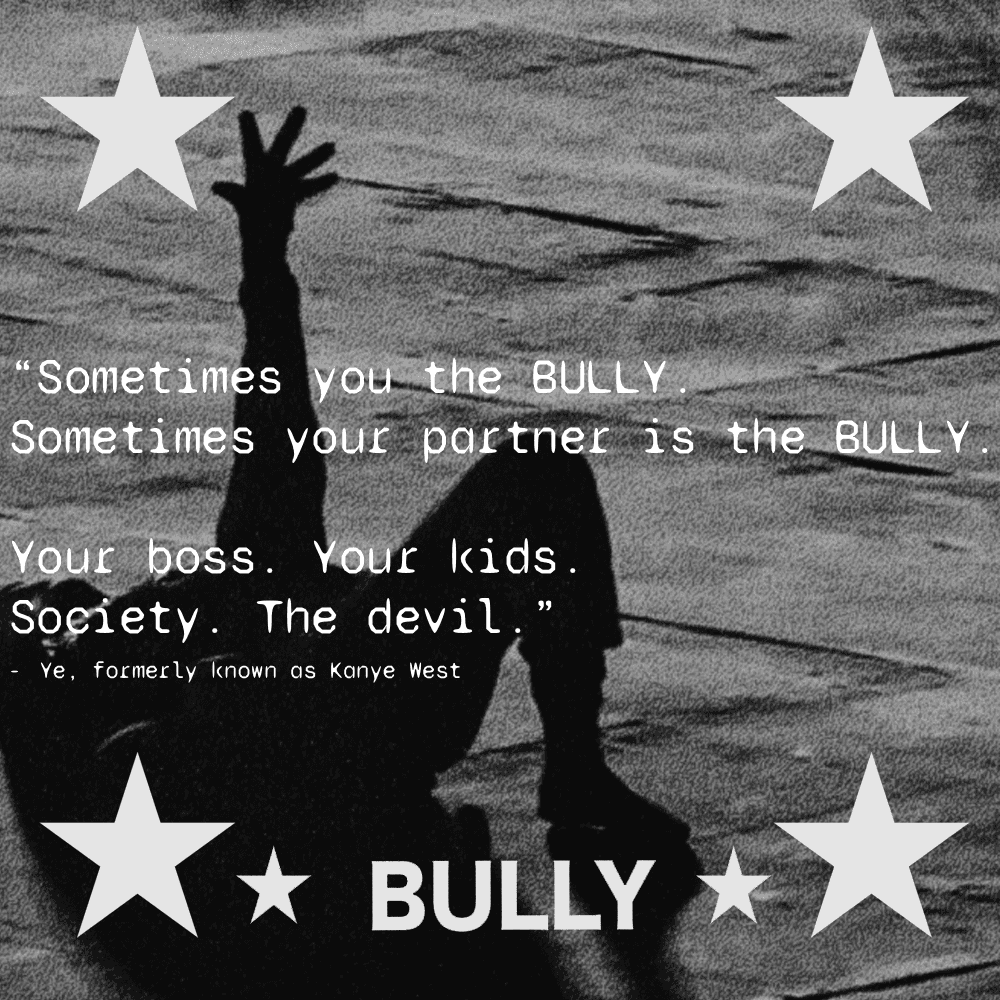
Perhaps that’s why I’ve taken a liking to the premise of Ye’s latest album, ‘Bully.’ Unlike Paul Thompson of GQ, whose 2025 review of what was at the time a work in progress ran with the headline ‘It Brings Us No Pleasure to Report That Kanye West Made a Good Kanye West Album,’ it brings me great pleasure to bring readers a positive review of the project. I’ll be at SoFi Stadium in L.A. this Friday on assignment.
‘What ‘Bully’ Reflects Back To Us’
On Ye (fka Kanye West), forgiveness, remorse and what I took away from the album.
Soon on Trinitonian.com
Ye - I CAN'T WAIT
0:00/1:34
I’ve been thinking a lot recently about apologies and remorse. What their “primary function” actually is. Rather than articulating what I think it is, I think it may be easier to list what it isn’t.
The most meaningful apologies are often the hardest, which is why we avoid them. It’s far easier to posture as though the thing you’re apologising for never happened. And when we do apologise, we often misunderstand the premise. Good apologies don’t demand reconciliation.
They demand that the party apologising feels genuine remorse about the way they’ve treated or acted towards someone. From this tension emerges confrontation: great apologies involve a mix of genuine remorse without the expectation of reconciliation and, crucially, self-forgiveness.
Good apologies are hard to negotiate precisely because they involve some amount of meaningful self-awareness to know that you should apologise without placing the burden of your own expectations on the party receiving it. Individuals should be willing to offer forgiveness, but forgiveness does not necessarily precede reconciliation. The apology does not necessarily precede the “happy ending.”
Growth emerges in the distance between apology and forgiveness. You are at your most vulnerable in the moments after you apologise to someone. Until you receive a response, which in some cases never comes, you’re in a strange liminal space. You have just shown the other party a vulnerability. In the aftermath of conflict, there are many logics by which this is compromising.
So, we don’t. The pragmatic impulse takes over, and we deem the burden too much for us. We neglect our most important relationships because we’re afraid of confronting ourselves when we’ve wronged someone.
I apologised to a former friend today. It wasn’t easy. It took me upwards of three years to do. But the burden lifted off my shoulders is immense. Whether or not he chooses to receive the apology is up to him. It may be the case that he isn’t willing to forgive me. That is okay. Because you make the apology not for the outcomes you imagine it might yield, but because you feel genuine remorse.
Whether or not my former friend chooses to forgive me is TBD. Deep down, I hope that we’re able to have a one-on-one conversation soon. If that comes to pass, I’ll be very happy he chose to forgive me. But before forgiveness comes affirmation. The best apologies demand none from the other party.
I was a bully for many years.
Perhaps that’s why I’ve taken a liking to the premise of Ye’s latest album, ‘Bully.’ Unlike Paul Thompson of GQ, whose 2025 review of what was at the time a work in progress ran with the headline ‘It Brings Us No Pleasure to Report That Kanye West Made a Good Kanye West Album,’ it brings me great pleasure to bring readers a positive review of the project. I’ll be at SoFi Stadium in L.A. this Friday on assignment.
‘What ‘Bully’ Reflects Back To Us’
On Ye (fka Kanye West), forgiveness, remorse and what I took away from the album.
Soon on Trinitonian.com
Ye - I CAN'T WAIT
San Antonio, TX
San Antonio, TX
1 Apr. 2026
زمان باید بگذرد
I’ve been thinking a lot recently about apologies and remorse. What their “primary function” actually is. Rather than articulating what I think it is, I think it may be easier to list what it isn’t.
The most meaningful apologies are often the hardest, which is why we avoid them. It’s far easier to posture as though the thing you’re apologising for never happened. And when we do apologise, we often misunderstand the premise. Good apologies don’t demand reconciliation.
They demand that the party apologising feels genuine remorse about the way they’ve treated or acted towards someone. From this tension emerges confrontation: great apologies involve a mix of genuine remorse without the expectation of reconciliation and, crucially, self-forgiveness.
Good apologies are hard to negotiate precisely because they involve some amount of meaningful self-awareness to know that you should apologise without placing the burden of your own expectations on the party receiving it. Individuals should be willing to offer forgiveness, but forgiveness does not necessarily precede reconciliation. The apology does not necessarily precede the “happy ending.”
Growth emerges in the distance between apology and forgiveness. You are at your most vulnerable in the moments after you apologise to someone. Until you receive a response, which in some cases never comes, you’re in a strange liminal space. You have just shown the other party a vulnerability. In the aftermath of conflict, there are many logics by which this is compromising.
So, we don’t. The pragmatic impulse takes over, and we deem the burden too much for us. We neglect our most important relationships because we’re afraid of confronting ourselves when we’ve wronged someone.
I apologised to a former friend today. It wasn’t easy. It took me upwards of three years to do. But the burden lifted off my shoulders is immense. Whether or not he chooses to receive the apology is up to him. It may be the case that he isn’t willing to forgive me. That is okay. Because you make the apology not for the outcomes you imagine it might yield, but because you feel genuine remorse.
Whether or not my former friend chooses to forgive me is TBD. Deep down, I hope that we’re able to have a one-on-one conversation soon. If that comes to pass, I’ll be very happy he chose to forgive me. But before forgiveness comes affirmation. The best apologies demand none from the other party.
I was a bully for many years.
Perhaps that’s why I’ve taken a liking to the premise of Ye’s latest album, ‘Bully.’ Unlike Paul Thompson of GQ, whose 2025 review of what was at the time a work in progress ran with the headline ‘It Brings Us No Pleasure to Report That Kanye West Made a Good Kanye West Album,’ it brings me great pleasure to bring readers a positive review of the project. I’ll be at SoFi Stadium in L.A. this Friday on assignment.
‘What ‘Bully’ Reflects Back To Us’
On Ye (fka Kanye West), forgiveness, remorse and what I took away from the album.
Soon on Trinitonian.com
Ye - I CAN'T WAIT
0:00/1:34